

‘Tetanus’ refers to a bacterial infection whose toxin invades nerves and blocks the brain’s muscle-relaxing signals.
The spores enter through dirty cuts, puncture wounds from rusty nails, burns, or animal bites, and once the toxin reaches the spine, it produces some defining signs. This includes lockjaw first, then painful muscle spasms, trouble swallowing, fever, and seizures. The toxin cannot be neutralised once it binds to nerve endings, so prevention is crucial. The World Health Organization (WHO) recommends six doses of tetanus-toxoid-containing vaccine across childhood and adolescence, delivered as combination shots such as DTaP in young children, Tdap in adolescents, and a Td booster in adults.
Active tetanus is a hospital emergency. Treatment combines tetanus immune globulin, wound cleaning, antibiotics, and spasm-control drugs. Diazepam, a benzodiazepine, is one of those spasm-control drugs, and it works by boosting GABA activity in the central nervous system. In the UK, diazepam is a prescription-only controlled medicine, so a doctor must prescribe it before you can obtain it legally.
What is Tetanus?
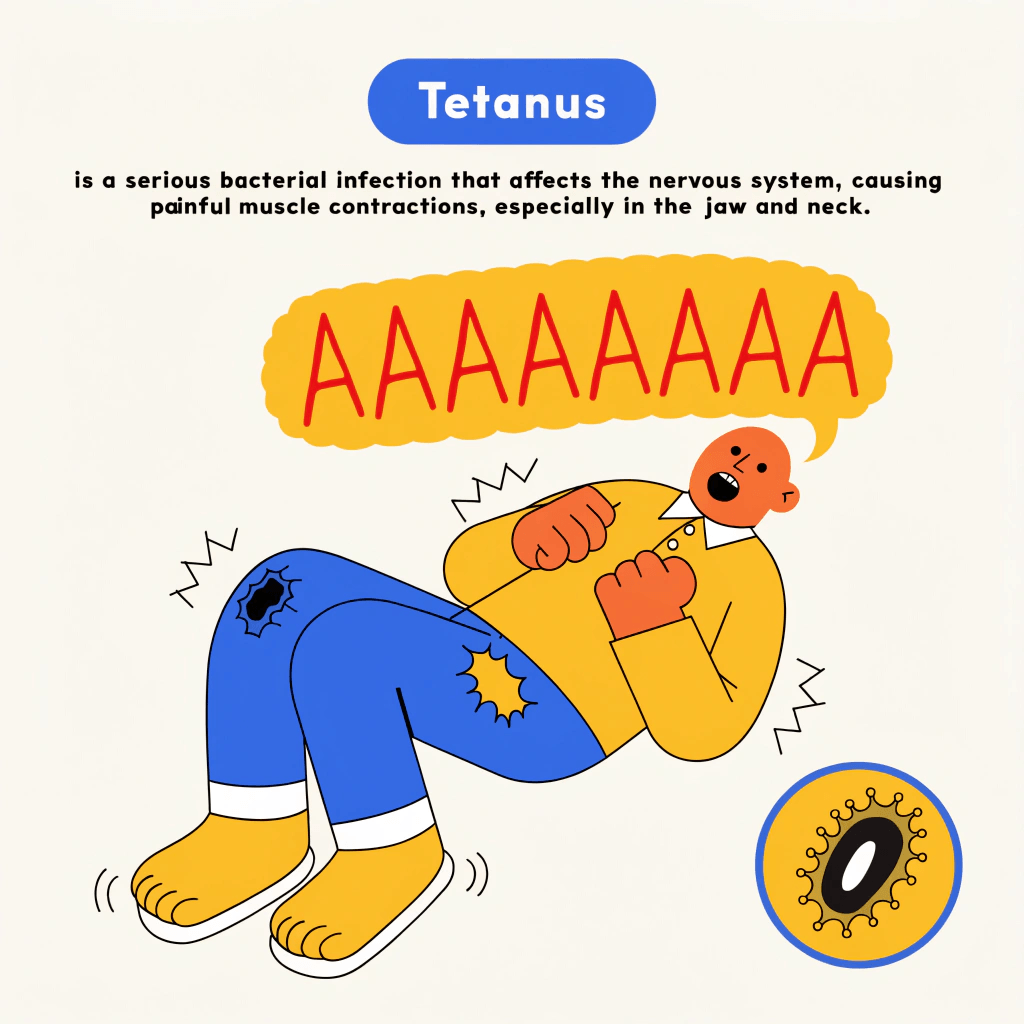
Tetanus, also known as lockjaw, is an acute infectious disease caused by Clostridium tetani bacteria, whose neurotoxin disrupts the nervous system and triggers severe, involuntary muscle spasms. Clostridium tetani is a spore-forming bacterium that lives in soil, dust, and animal faeces, and its spores can survive for years because they resist heat and most antiseptics. Although most tetanus spores enter via wounds, according to the Cleveland Clinic, up to 50% of tetanus cases have no wound or infection site that doctors can identify.
Inside our body, the toxin tetanospasmin travels along nerve fibres to the spinal cord and brainstem, where it stops the release of the chemicals that tell muscles to relax. Dr Nagami from Mass General Brigham says that symptoms of Tetanus take 3 to 21 days to appear, averaging around day eight. Tetanus in adults and tetanus in children or infants follow the same mechanism, though newborns and older adults face the highest risk of death. Tetanus has no DSM criteria because it is a physical infection diagnosed by clinical signs.
What is the History of Tetanus?
The history of tetanus as a disease dates back to ancient times. But researchers identified Clostridium tetani as the cause in 1884. It killed at high rates for centuries, especially among soldiers who acquired it from battlefield wounds.
The science arrived much later. In 1891, they developed an antitoxin and produced the first tetanus toxoid vaccine in 1924. Widespread vaccination in the 40s drove cases down sharply: global tetanus incidence fell from an estimated 615,000 cases in 1990 to about 74,000 in 2019. However, the old name for the disease, lockjaw, is still in use to this date.
Why is Tetanus Called Lockjaw?
Tetanus is called “lockjaw” because its most recognisable symptom is a painful, involuntary tightening of the jaw and neck muscles, making it difficult or impossible to open the mouth. The term dates to the 1700s.
The bacteria release a toxin that blocks inhibitory neurotransmitter release and stiffens the body muscles. The stiffness starts at the jaw, spreads to the neck, back, and abdomen, and in severe cases reaches the muscles responsible for respiration.
Where are Tetanus Bacteria Found?
The places where tetanus bacteria are commonly found are listed below.
- Soil: Tetanus spores live throughout soil, particularly where animal waste has mixed in, and they enter the body through breaks in the skin.
- Metal tools: CDC surveillance links about 32% of acute-injury tetanus cases to stepping on a nail. Rusty tools, nails, needles, and barbed wire hold spores on their surfaces, creating several different causes of entry.
- Dust: House dust carries dormant spores that survive for long periods and infect deep or contaminated wounds.
- Manure: Animal manure is a dense source of spores, which is why agricultural and rural injuries carry a higher risk.
- Saliva: Animal and human saliva transfers bacteria into bites and contaminated wounds, seeding the infection below the skin.
What are The Causes of Tetanus?
The causes of tetanus include cuts, wounds, burns, or any injury that lets Clostridium tetani spores reach the low-oxygen tissue deep inside a wound, where they germinate and produce toxin. The common ways it enters the body are listed below.
- Cuts: A cut refers to a break in the skin that gives spores a direct route into deeper tissue. Even tetanus from a small cut turns serious when soil, dust, or manure contaminates it, so adults and kids both need to clean wounds promptly.
- Puncture Wounds: A puncture wound refers to a deep, narrow injury. It is the most dangerous of the tetanus causes because it traps spores in oxygen-poor tissue. Tetanus after a puncture wound is common when someone steps on a nail, since the depth seals the bacteria away from air.
- Burns: A burn refers to skin damage from heat, chemicals, or electricity that destroys protective tissue and leaves a raw surface where spores settle. Dead tissue in a burn supplies the anaerobic conditions the bacteria need.
- Animal Bites: An animal bite refers to a puncture or tearing injury from teeth that drives saliva and surface bacteria below the skin. Depth combined with contamination makes bites a reliable entry point.
- Injury from Rusty Objects: An injury from a rusty object refers to a wound from corroded metal such as a rusty nail, which carries spores on its surface. The rust does not cause tetanus; it marks an object that sat in soil long enough to collect bacteria.
- Dirty Wounds: A dirty wound refers to any injury contaminated with soil, faeces, or debris, which sharply raises the odds of spores taking hold. Wounds packed with dead tissue or foreign material carry the highest risk because oxygen cannot reach the bacteria.
Is it Possible to Get Tetanus from a Small Cut?
Yes, it is possible to get tetanus from a small cut because the bacteria need only a break in the skin to get inside. Many people contract tetanus after neglecting a minor cut. What enters the wound matters more than its size.
Infection occurs when a cut is contaminated with soil, dust, manure, or a dirty object, since each carries spores. The risk increases with deeper or dirtier wounds and for anyone whose vaccination is out of date, so monitor a contaminated cut for early symptoms and clean it properly right away.
What are The Symptoms of Tetanus?
The symptoms of tetanus include jaw and muscle stiffness that progresses to painful, full-body spasms as the toxin spreads. The symptoms of tetanus are listed below.
- Lockjaw: Lockjaw refers to stiffness and cramping of the jaw muscles. It is the first of the tetanus symptoms to appear. It makes opening the mouth painful or impossible.
- Neck and shoulder stiffness: This refers to tightening in the muscles of the neck and upper body, an early signal that the toxin has reached the spinal cord. It spreads downward over the following days.
- Trouble swallowing: This refers to difficulty moving food or liquid past the throat as the pharyngeal muscles tense. It is one of the first signs of adult tetanus that sends people to a doctor.
- Restlessness and irritability: This refers to agitation and discomfort that appear before the spasms become obvious. In tetanus in children, it presents alongside excessive crying and difficulty feeding.
With time, the disease progresses, and so do the symptoms. Some of the advanced signs of tetanus include the following.
- Generalised muscle spasms: These refer to sudden, painful, whole-body contractions strong enough to fracture bones, often triggered by light, sound, or touch.
- Opisthotonus: This refers to a rigid arching of the back and neck caused by powerful, sustained spasms of the spinal muscles.
- Breathing difficulty: This refers to spasms of the throat and chest muscles that block the airway and cause chest tightness.
- Autonomic instability: This refers to fever, sweating, swings in blood pressure, and a fast heart rate as the toxin disrupts the body’s autonomic functions.
Among all the above advanced symptoms, breathing difficulty is the most life-threatening.
What is the Symptoms Timeline for Tetanus?
According to the WHO, the symptom timeline for tetanus begins within 3 to 21 days of exposure to Clostridium tetani, averaging around eight days. A shorter gap between injury and first symptom signals more severe disease.
From there, they progress in order: lockjaw first, then neck and abdominal stiffness, then painful generalised spasms and fever, worsening over roughly two weeks. Diagnosis of tetanus is clinical, i.e., there are no specific tests to confirm its presence.
How is Tetanus Diagnosed?
The main ways to diagnose tetanus are listed below.
- Clinical examination: A doctor diagnoses tetanus by examining the patient for lockjaw, the fixed grimace called risus sardonicus, and muscle spasms.
- Medical and wound history: Providers ask about recent cuts, punctures, or trauma and check the vaccination record for gaps in protection.
- Spatula test: Touching the back of the throat with a soft instrument triggers a jaw clench instead of a gag reflex in people with tetanus.
Rapid diagnosis is crucial, as tetanus progression to respiratory muscle spasm is life-threatening. Tetanus does not have any DSM-5 criteria and does not require a blood culture for confirmation.
Is Tetanus Fatal?
Yes, tetanus can be fatal. According to the US Centers for Disease Control and Prevention (CDC), about 1 in 10 tetanus cases in the United States is fatal even with treatment. StatPearls reports a case-fatality rate of 10% to 20% with intensive care, approaching 100% without it.
When tetanus starts involving respiratory muscles, that’s when it starts getting life-threatening. Older adults and newborns face the steepest risk, which makes early access to proper treatment and the healing of the wound important.
Are There Any Cures for Tetanus?
No, there is no fixed cure for tetanus once symptoms develop. That’s why we must focus more on prevention. Recovery happens only as the body grows new nerve terminals over weeks or months.
Tetanus is a medical emergency that requires intensive, long-term hospital care to manage symptoms and support breathing while the toxin runs its course. Proper treatment involves antitoxin, wound cleaning, sedatives for muscle spasms, and antibiotics, though none of these reverses the damage the toxin has already caused. Care keeps the patient stable until the nervous system repairs itself.
How to Prevent Tetanus?
The ways to prevent tetanus are listed below.
- Vaccination: Staying current with tetanus-toxoid-containing vaccines is the single most effective way to prevent infection at any age.
- Booster doses: A booster every 10 years maintains adult immunity, since one infection confers no lasting protection.
- Prompt wound care: Cleaning cuts, punctures, and burns quickly with soap and water removes spores before they germinate.
- Clean delivery practices: Sterile cord-cutting and immunising mothers prevent the neonatal tetanus that still kills newborns in low-resource regions.
Medical professionals highly recommend getting vaccinated, as the chances of contracting tetanus in a vaccinated individual are nearly 0.01 per 100,000 people.
What are The Types of Tetanus Vaccines?
The types of tetanus vaccines include combination vaccines that protect against tetanus alongside diphtheria and, in some formulations, whooping cough. The types of tetanus vaccines are listed below.
- DTaP: DTaP is a paediatric vaccine that protects children against diphtheria, tetanus, and pertussis in a single shot. It exposes the immune system to an inactivated toxin, allowing the body to build antibodies on its own. The childhood schedule includes five doses by age six.
- Tdap: Tdap is for those aged 7 years and older, with a lower diphtheria and pertussis dose suited to an older immune system. Clinicians give it as a one-off booster around age 11 to 12 and again during each pregnancy to pass protection to the newborn.
- Td Booster: The Td booster covers tetanus and diphtheria and is the standard adult top-up on a proper schedule. Most adults need one every 10 years, with timing set by age and previous doses.
What is The Tetanus Vaccine Schedule by Age?
For children and adolescents, the CDC schedule uses a five-dose DTaP series at 2, 4, and 6 months, 15 to 18 months, and 4 to 6 years, with a Tdap booster at 11 to 12 years. The WHO frames lifelong protection as six doses in total: three primary plus three boosters across childhood and adolescence. For adults, a Td or Tdap booster every 10 years maintains immunity, and anyone who missed childhood vaccination completes a three-dose catch-up series.
What are The Treatments of Tetanus?
The treatment options for tetanus involve neutralising free toxin, clearing the bacteria, and controlling spasms while the patient is supported in hospital. The treatments for tetanus are listed below.
- Emergency Hospital Care: Emergency hospital care refers to admission, usually to intensive care, where a doctor monitors the airway and prepares breathing support. It keeps patients alive through spasms that can otherwise stop their breathing.
- Tetanus Immune Globulin (TIG): TIG is an injection of ready-made antibodies that neutralise toxins still circulating in the blood. It shortens the illness and reduces its severity, though it cannot reach toxins already bound to nerves.
- Antibiotics: Antibiotics such as metronidazole or penicillin kill the Clostridium tetani still in the wound. They stop the bacteria from producing more toxin but can’t help with spasms already underway.
- Wound Cleaning and Debridement: Wound cleaning and debridement refer to removing dirt and dead tissue from the injury site. This strips out the anaerobic pockets where spores thrive and limits further toxin release.
- Medications for Symptom Control: These are sedatives and muscle relaxants, including diazepam, that calm the spasms and rigidity. They keep patients comfortable and protect the muscles and airway from spasm damage.
Why is Tetanus a Medical Emergency?
Tetanus is a medical emergency because the symptoms can result in respiratory muscle paralysis leading to respiratory arrest.
The effects start with lockjaw and spread to the respiratory muscles, which can cause airway blockage, suffocation, or cardiovascular collapse. Everyone with tetanus symptoms needs to see a doctor or reach an emergency department immediately because the symptoms progress really fast. StatPearls has cited instances where a shorter incubation period led to rapid progression of respiratory arrest
Is Seeing a Doctor Necessary Before Taking Symptom Control Medications for Tetanus?
Yes, seeing a doctor is necessary before taking symptom-control tetanus medications, because these drugs are powerful sedatives that carry real risks without supervision. Diazepam and similar medicines suppress breathing, especially at the high doses that tetanus demands.
Medical supervision balances the dose against the danger of oversedation, respiratory depression, and coma. Before prescribing, a doctor evaluates the severity of the spasms, the patient’s airway and breathing, and other conditions, then monitors heart rate, blood pressure, and oxygen continuously while the medication is given.
What Are the Best Symptom Control Medications for Tetanus?
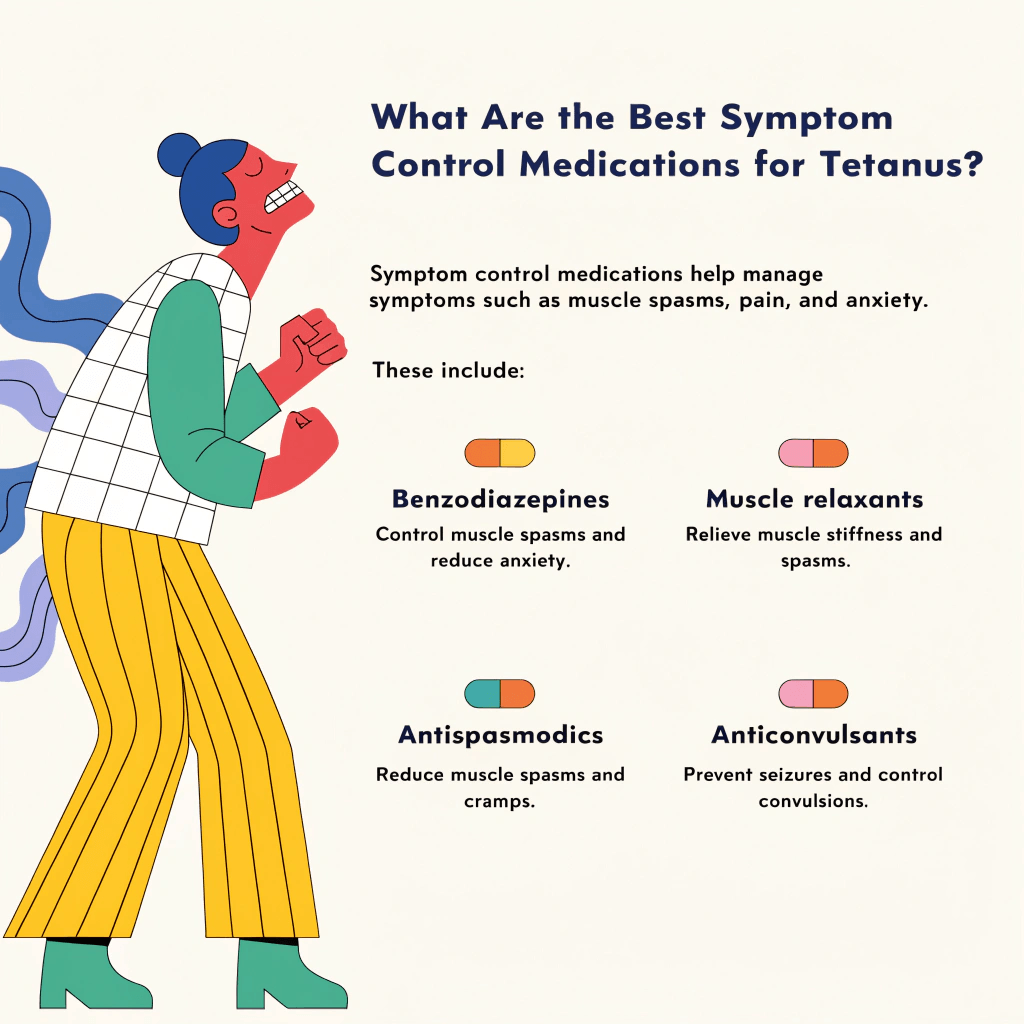
The best symptom control medications for tetanus include muscle relaxant drugs. The symptom control medications for tetanus are listed below.
- Diazepam: Diazepam is a benzodiazepine that relaxes muscles, sedates the patient, and suppresses convulsions, making it a first-line choice for tetanus spasms.
- Magnesium sulphate: Magnesium sulphate is an infusion that controls spasms and the surge of stress hormones. It is used alongside benzodiazepines.
- Baclofen: Baclofen is a muscle relaxant delivered into the spinal fluid to ease severe rigidity in an intensive care setting.
- Vecuronium: Vecuronium is a neuromuscular blocking agent reserved for severe cases that do not respond to benzodiazepines, used only with mechanical ventilation.
How does diazepam work on Tetanus?
Diazepam works on tetanus by restoring the inhibitory signalling that the toxin has switched off. Its main actions are as a muscle relaxant, sedative, and anticonvulsant, all achieved by enhancing GABA activity in the central nervous system. A Cochrane review of 134 children with tetanus found that diazepam alone was associated with fewer deaths than a combination of phenobarbitone and chlorpromazine.
What Are the Legal Options for Buying Diazepam for Tetanus in the UK?
The legal options for buying diazepam for tetanus in the UK are listed below.
- GP prescription: A general practitioner assesses the patient and issues a prescription where clinically appropriate.
- Hospital supply: Hospital doctors administer diazepam directly as part of emergency tetanus care.
- Registered online pharmacies: GPhC-registered online pharmacies dispense diazepam only against a valid prescription.
- NHS or private prescription: Any registered community pharmacy fills an NHS or private prescription.
Is It Possible to Buy Diazepam for Tetanus in the UK Without a Prescription?
No, it is not possible to buy diazepam in the UK for tetanus without a prescription. According to the British National Formulary (BNF), maintained by NICE, diazepam is a Class C, Schedule 4 controlled drug and a prescription-only medicine, so supplying it without a prescription is a criminal offence. If you want to know more about diazepam, please get in touch with us.
The types of tetanus vaccines prevent the disease, and the symptoms, causes, and evidence-based treatments of tetanus all indicate the need for urgent hospital care; therefore, the safest option is always to consult a doctor rather than use unregulated medications. If you think you have tetanus, treat it as the medical emergency it is and go to the emergency department.