
Bensedin is a brand of diazepam, a prescription medicine from the benzodiazepine family that helps calm excessive brain activity. Doctors prescribe it to relieve anxiety, relax muscles, control certain seizures, and manage alcohol withdrawal symptoms under appropriate medical supervision.
It works by increasing gamma-aminobutyric acid (GABA) activity, a natural chemical messenger in the brain. This slows down overactive nerve signals, producing a calming effect on both the brain and the body.
In medical practice, Bensedin is commonly used to treat anxiety disorders, muscle spasms, alcohol withdrawal, certain seizure conditions, and as a pre-procedure sedative in selected patients.
Doctors may prescribe in different strengths depending on the condition being treated. Common tablet strengths include 2 mg, 5 mg, and 10 mg. The dose, frequency, and treatment duration vary according to individual clinical needs.
Bensedin is manufactured by Galenika (officially Galenika a.d.) in Serbia and is widely recognised across many European countries and several international markets where it is prescribed through licensed healthcare systems. While diazepam is routinely prescribed throughout the United Kingdom, the brand itself is more commonly associated with countries in Eastern and Central Europe.
In the UK, medicines containing diazepam are normally obtained through regulated healthcare providers and licensed pharmacies following a clinical assessment, helping ensure patients receive genuine medicines that meet UK quality and safety standards.
What Is Bensedin?
Again, Bensedin is a prescription brand name of diazepam, a benzodiazepine medicine classified as a central nervous system (CNS) depressant. It is used to treat anxiety, seizures, muscle spasms, alcohol withdrawal symptoms, and certain medical procedures by calming excessive brain activity.
According to the World Health Organisation (WHO), around 301 million people live with anxiety disorders in the world, making benzodiazepines one of the recognised treatment options for carefully selected patients. At the same time, Diazepam is also listed on the WHO Model List of Essential Medicines due to its established medical value.
According to Dr Josef Witt-Doerring, a board-certified psychiatrist, diazepam is highly effective for short-term relief of anxiety and muscle spasms, but it should be prescribed carefully because long-term use can lead to tolerance and dependence. He emphasises that benzodiazepines are most appropriate when used for the right patient for the shortest suitable duration.
Bensedin tablets are manufactured using pharmaceutical-grade diazepam combined with inactive ingredients that help produce stable tablets with consistent strength. After swallowing, diazepam is absorbed into the bloodstream and enhances the activity of gamma-aminobutyric acid (GABA), the brain’s main calming neurotransmitter. This reduces excessive nerve signalling, producing relaxation, reducing anxiety, controlling seizures, and easing muscle spasms.
Diazepam was first synthesised in 1959 by chemist Leo Sternbach at Hoffmann-La Roche. It later received FDA approval and became one of the world’s most widely prescribed benzodiazepines because of its effectiveness and relatively favourable safety profile when used appropriately.
What is The History of Bensedin Diazepam?
The history of Bensedin started after the worldwide success of diazepam in the 1960s. Diazepam was first synthesised by Leo Sternbach at Hoffmann-La Roche in 1959 and launched as Valium in 1963. It was introduced as a safer and more effective alternative to barbiturates for treating anxiety, muscle spasms, seizures, and alcohol withdrawal. From the late 1960s through the early 1980s, it became the most prescribed medicine in many Western countries and earned the nickname “Mother’s Little Helper.”
As the demand for diazepam increased worldwide, several pharmaceutical manufacturers began producing their own branded versions. One of the best-known is Bensedin, manufactured by the Serbian pharmaceutical company Galenika, which has operated since 1945. Over time, it became widely recognised across Serbia, Croatia, Bosnia and Herzegovina, Montenegro, North Macedonia, and many other European markets, where it remains a familiar diazepam brand.
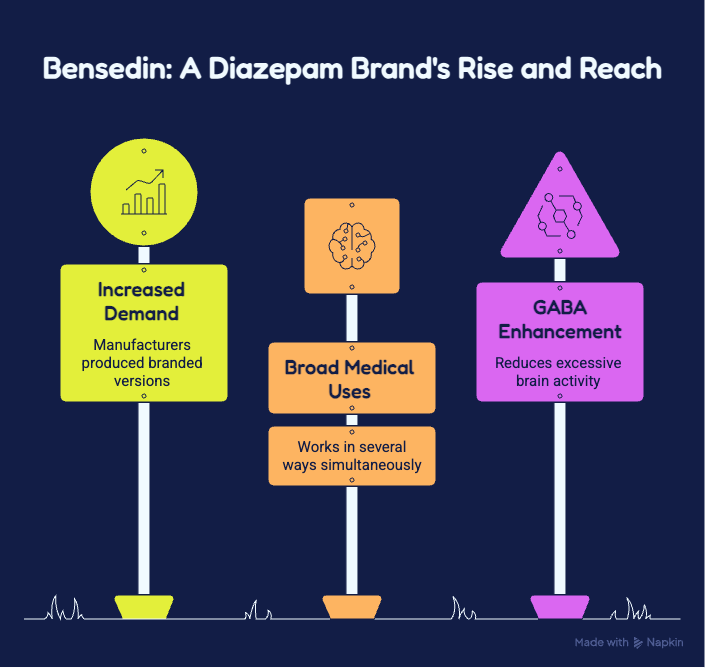
Like other diazepam medicines, Bensedin became popular because it works in several ways simultaneously. By increasing the effect of GABA, it helps reduce excessive brain activity, relieve anxiety, relax muscles, control certain seizures, and ease symptoms of alcohol withdrawal. This broad range of medical uses has made it one of the most recognised diazepam brands in Europe for decades.
How Does Bensedin Diazepam Work?
Bensedin works by increasing the activity of gamma-aminobutyric acid (GABA), the brain’s main calming neurotransmitter. It binds to the GABA-A receptor, making GABA more effective at slowing down nerve activity throughout the central nervous system (CNS).
As GABA activity increases, overactive nerve signals are reduced. This produces a calming effect on the brain and body, helping relieve anxiety, relax muscles, control certain seizures, and support several other approved medical uses of Bensedin. Because it acts throughout the CNS, symptoms like drowsiness, slower reaction times, and reduced alertness are particularly evident at higher doses.
Bensedin stays in the body for a relatively long time. The half-life is usually between 20 and 50 hours, but its active metabolites, including desmethyldiazepam, can remain in the body for up to 100 hours or longer. This is one reason why the medicine may continue working after the immediate effects begin to wear off and why repeated doses should always follow medical advice.
What Are the Medical Uses of Bensedin Diazepam?
The medical uses of Bensedin include the treatment of several neurological, muscular, and anxiety-related conditions where reducing excessive nerve activity helps improve symptoms and quality of life.
The main medical uses of Bensedin are listed below.
- Anxiety Disorders: Anxiety disorders cause excessive fear and worry. Bensedin acts as an anxiolytic by enhancing GABA activity, helping calm the brain and providing relief from persistent anxiety.
- Short-Term Anxiety Relief: Acute anxiety can become overwhelming. Bensedin provides rapid calming effects and, because of its relatively long half-life, may have a lasting impact after each dose.
- Muscle Spasms: Painful, involuntary contractions. Bensedin relaxes muscles by reducing excessive nerve signalling between the brain, spinal cord, and muscles.
- Seizure Disorders or Epilepsy: Certain seizures result from abnormal brain activity. Bensedin helps stabilise nerve signals and may be used during acute seizure emergencies under medical supervision.
- Alcohol Withdrawal Symptoms: Alcohol withdrawal may cause anxiety, tremors, and seizures. Benzodiazepines calm the nervous system and lower the risk of serious withdrawal complications.
- Pre-Procedure Sedation: Before some medical procedures, Bensedin helps patients feel calm and relaxed while reducing anxiety and muscle tension before treatment begins.
- Insomnia: Severe anxiety-related insomnia may prevent restful sleep. Benzodiazepines’ anxiolytic and calming effects can help people fall asleep more easily during short-term treatment.
- Restless Legs Syndrome: Restless legs syndrome causes uncomfortable sensations in the legs and an urge to move. Bensedin may reduce muscle tension and improve sleep in selected patients.
- Panic Attacks: Panic attacks develop suddenly with intense fear and physical symptoms. Bensedin quickly calms excessive brain activity and may have a lasting impact due to its long duration.
- Agitation: Restlessness and emotional distress. Bensedin reduces excessive central nervous system activity, helping patients feel calmer in carefully selected situations.
- Vertigo: Some forms of vertigo cause severe dizziness and imbalance. Bensedin may reduce vestibular overactivity, helping relieve symptoms in certain cases.
- Tetanus: Tetanus causes severe muscle stiffness and painful spasms. Bensedin helps relax muscles while reducing uncontrolled nerve activity during supportive medical treatment.
- Spastic Muscular Paresis: Spastic muscular paresis causes muscle stiffness and reduced range of motion. Bensedin relaxes overactive muscles, improving comfort and mobility in some patients.
- Stiff Person Syndrome: a rare neurological disorder characterised by muscle rigidity. Bensedin enhances GABA function, reducing stiffness and painful spasms.
- Organophosphate Poisoning: Organophosphate poisoning may trigger seizures and muscle overactivity. Bensedin helps control seizure activity alongside other emergency treatments.
- Oxygen Toxicity: Oxygen toxicity can occasionally cause seizures during specialised medical treatments. Bensedin may be used to control seizure activity in selected clinical settings.
- ADHD: Bensedin is not routinely prescribed for ADHD. Although it may reduce anxiety in some individuals, it does not treat the core symptoms of attention deficit hyperactivity disorder.
How Long Does Bensedin Diazepam Last?
Bensedin lasts 6 to 12 hours for the most noticeable effects, though this depends on dosage, age, liver function, metabolism, and individual response. Because it is a long-acting benzodiazepine, its calming and muscle-relaxing effects may continue even after the strongest effects have worn off.
The active medicine remains in the body much longer than its immediate effects. Due to its long half-life and active metabolites, the medicine can stay in the system for 10 to 21 days, and sometimes longer after repeated use.
What Are the Common Dosages of Bensedin Diazepam?
Common Bensedin dosages include several tablet strengths prescribed for different medical conditions. The appropriate strength varies depending on the patient’s condition, age, and medical history.
Common Bensedin dosages are listed below.
- 2 mg: The lowest commonly prescribed strength. It may be used when a smaller dose is appropriate, even though it can still cause side effects such as drowsiness or dizziness.
- 5 mg: A widely prescribed strength for several medical conditions. Like all tablets, it may cause side effects, including sleepiness, reduced concentration, and slower reactions.
- 10 mg: One of the strongest routine tablet strengths. It is associated with a higher likelihood of side effects, particularly sedation, impaired coordination, and reduced alertness.
- Injectable Solution (10 mg/2 ml): Bensedin is also available as a 10 mg/2 ml injectable solution, primarily used by healthcare professionals in hospitals for emergencies such as prolonged seizures, severe muscle spasms, or pre-procedure sedation.
Are There Any Side Effects of Bensedin Diazepam?
Yes, Bensedin has side effects. Like all benzodiazepines, Bensedin can cause unwanted effects, although not everyone experiences them.
Common side effects include drowsiness, dizziness, tiredness, muscle weakness, poor coordination, blurred vision, and difficulty concentrating. Some people may also notice slower thinking, reduced memory, or confusion, particularly at higher doses.
More serious side effects are less common but may include physical dependence, breathing difficulties (respiratory depression), severe allergic reactions, unusual behavioural changes, overdose, or withdrawal symptoms after prolonged use. The risk increases when Bensedin is taken with alcohol, opioids, or other medicines that slow the central nervous system.
Long-term use may lead to tolerance, meaning higher doses become necessary to achieve the same effect, as well as dependence, making it difficult to stop treatment without medical supervision. Withdrawal symptoms can include anxiety, insomnia, tremors, sweating, and, in severe cases, seizures.
People sometimes confuse this med with other brands like Valium, Sedil, and Actavis, wondering which one is more effective. However, they are just different brands with slight differences in duration of action, strengths, and prescribing considerations.
What’s the Difference Between Bensedin Diazepam and Martin Dow Valium?
The difference between Bensedin and Martin Dow Valium is presented in the table below.
| Feature | Bensedin | Martin Dow Valium |
|---|---|---|
| Definition | A brand of diazepam manufactured by Galenika in Serbia. | A brand of diazepam manufactured by Martin Dow. |
| Examples | Bensedin 2 mg, 5 mg, and 10 mg tablets. | Valium 2 mg, 5 mg, and 10 mg tablets by Martin Dow. |
| Duration of Action | Long-acting benzodiazepine. Effects typically last 6–12 hours, while the medicine remains in the body much longer. | Long-acting benzodiazepine with a similar duration because it contains the same active ingredient, diazepam. |
| Onset Time | Usually begins working within 30–60 minutes after an oral dose. | Similar onset of around 30–60 minutes following an oral dose. |
| Common Clinical Uses | Anxiety, muscle spasms, alcohol withdrawal, seizures, and pre-procedure sedation when prescribed by a healthcare provider. | Used for the same medical conditions because it contains diazepam as the active ingredient. |
| Main Difference | Manufactured by Galenika with its own branding and packaging. | Manufactured by Martin Dow with different branding, packaging, and tablet appearance, while the active ingredient remains the same. |
Is Seeing a Doctor Necessary Before Taking Bensedin Diazepam?

Yes, seeing a doctor is necessary before taking Bensedin because it is a prescription medicine that is not suitable for everyone. Medical supervision helps ensure that treatment is appropriate, safe, and tailored to your individual health needs.
Before prescribing, a doctor will usually review your medical history, current medicines, allergies, pregnancy status, and any history of alcohol or substance dependence. They may also assess whether symptoms are caused by another condition, such as sleep disorders, depression, neurological conditions, or other underlying illnesses.
During treatment, the doctor may monitor how well the medicine is working, check for side effects, and reduce the risk of tolerance, dependence, and withdrawal symptoms, especially if treatment continues beyond the short term.
When looking for information about diazepam, always rely on trusted sources, such as your doctor, pharmacist, the NHS, MHRA, or other recognized healthcare organizations.
What Brands Are Similar to Bensedin Diazepam?
Several medicines are similar to Bensedin because they contain diazepam as the active ingredient or belong to the same benzodiazepine family. While the manufacturer, packaging, tablet appearance, and inactive ingredients may differ, the active ingredient is often the same across diazepam brands.
Some of the most recognised brands include:
- Martin Dow Valium: A well-known brand manufactured by Martin Dow and prescribed in several international markets.
- Sedil: A brand recognised for treating anxiety, muscle spasms, and related conditions under medical supervision.
- Elipam: A brand produced by Elikem Pharmaceuticals and commonly available in selected countries.
- Actavis: A widely recognised brand manufactured by Actavis, known across several European healthcare markets.
- Accord: A generic product supplied by Accord Healthcare and commonly dispensed through regulated pharmacies.
- Crescent: A UK-recognised brand manufactured by Crescent Pharma for prescription use.
- Stesolid: A brand available in both tablet and rectal solution forms, commonly used in hospital and emergency settings.
- Valzepam: A branded medicine available in selected countries for anxiety, muscle spasms, and seizure management.
- Mylan: A generic product manufactured by Mylan and supplied in many regulated pharmaceutical markets.
- Teva: One of the world’s most recognised generic brands, manufactured by Teva Pharmaceuticals.
- Zopisign: Unlike Bensedin, Zopisign contains zopiclone, not. It is prescribed for short-term treatment of insomnia rather than anxiety or muscle spasms.
- Roche Valium: The original and most historically recognised brand developed by Hoffmann-La Roche after diazepam was introduced in 1963.
Although these medicines may be used for similar conditions, they are not always interchangeable. Differences in manufacturers, inactive ingredients, available strengths, and regulatory approvals mean the most suitable brand should always be chosen with advice from a qualified healthcare professional.
What Are the Most Trusted Sources of Information on Bensedin Diazepam?
The most trusted sources of information on Diazepam & Benzodiazepine include recognised healthcare professionals and official medical organisations that provide accurate, evidence-based guidance.
The most trusted sources are listed below.
- NHS: Provides reliable information on diazepam, its uses, side effects, and safe use for patients in the UK.
- MHRA: The UK’s medicines regulator. Publishes safety alerts, recalls, and warnings about counterfeit Bensedin Diazepam and other medicines.
- Healthcare Provider: A GP, specialist, or pharmacist who can assess your condition and provide personalised medical advice.
- Patient Information Leaflet (PIL): The official leaflet supplied with genuine Bensedin that explains dosage, precautions, interactions, and possible side effects.
- Peer-reviewed Medical Literature: Scientific journals and clinical guidelines that provide evidence-based information about diazepam’s effectiveness and safety.
How to Obtain Bensedin Diazepam Safely in the UK?
The recommended ways to obtain Diazepam or Bensedin safely in the United Kingdom are listed below.
- Consult a GP: Discuss your symptoms and whether diazepam is clinically appropriate.
- See a Specialist: Some conditions require assessment by a neurologist or psychiatrist.
- Use a Registered Pharmacy: Obtain medicines only from a licensed UK pharmacy.
- Verify the Medicine: Check the packaging, batch number, expiry date, and patient information leaflet.
- Choose Trusted Sources: Rely on the NHS, MHRA, pharmacists, and qualified healthcare professionals for information.
- Follow the Prescribed Dosage: Always take diazepam exactly as directed by your prescriber.
Is It Possible to buy Bensedin Diazepam without a Prescription in the UK?
No, it is not possible to buy a prescription medicine like Bensedin in the UK because it is a prescription-only benzodiazepine and a Class C, Schedule 4 controlled drug under UK law. Bensedin has been recognised for medical use as an anxiolytic, muscle relaxant, anticonvulsant, and sedative. Because it can cause dependence, misuse, and serious side effects, its use should be assessed by a qualified healthcare professional.
A doctor will determine whether generic Diazepam is appropriate, select the correct dosage, and monitor treatment as necessary. Patients should obtain only genuine medicines from regulated pharmacies and choose a trusted supplier through legitimate healthcare channels. The MHRA and NHS also warn the public about counterfeit bensedin sold through unregulated sources. Buying medicines outside regulated healthcare settings increases the risk of receiving counterfeit or unsafe products.