
Benzodiazepine is a class of prescription medicines that calms the central nervous system. They are widely prescribed for conditions including anxiety disorders, panic attacks, insomnia, muscle spasms, seizures, alcohol withdrawal, and procedural sedation.
Based on how long they remain active in the body, benzodiazepines are generally classified into short-acting, intermediate-acting, and long-acting medicines. Common examples include diazepam, lorazepam, alprazolam, clonazepam, temazepam, oxazepam, chlordiazepoxide, and nitrazepam.
Among them, Bensedin (Diazepam) remains one of the most recognised long-acting benzodiazepines because of its broad medical applications. In the United Kingdom, diazepam is a prescription-only medicine, meaning it is normally supplied after assessment by a qualified healthcare professional through a regulated pharmacy.
What is Benzodiazepine?
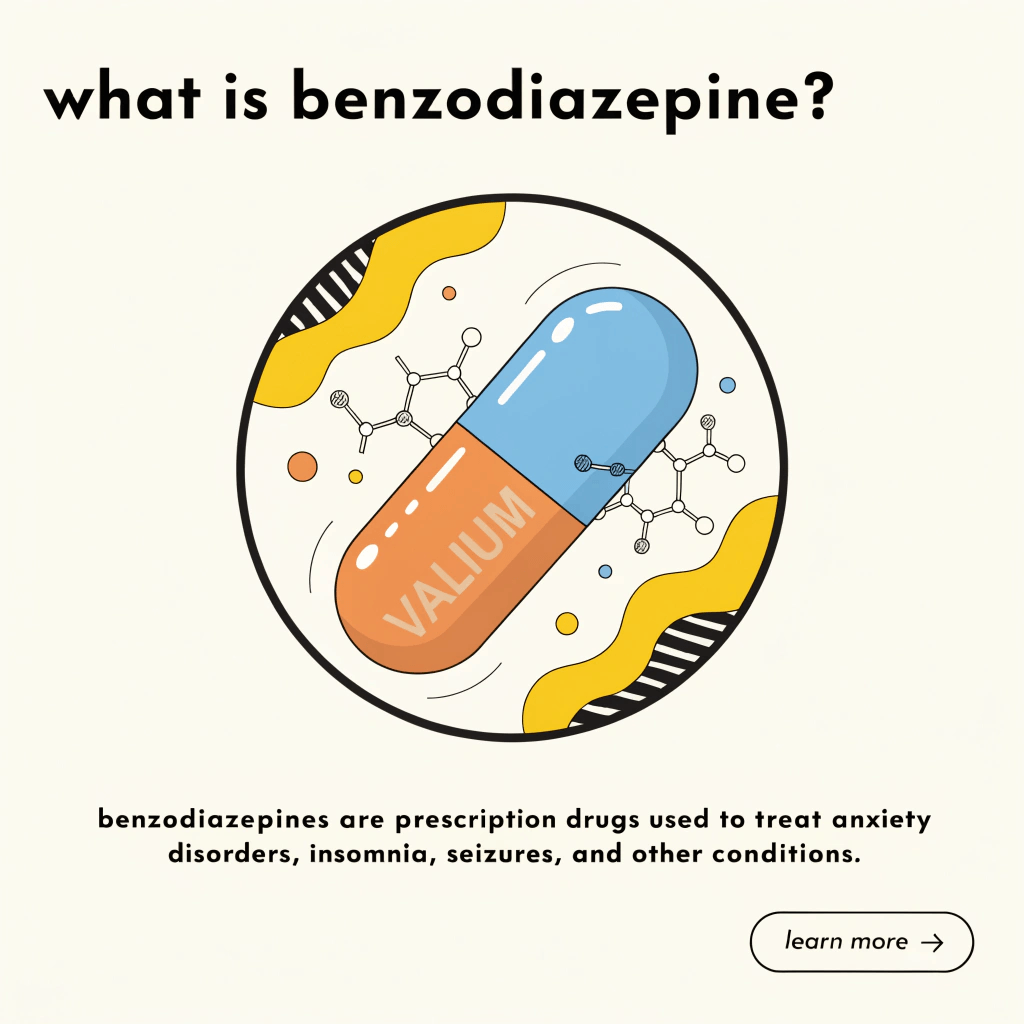
Benzodiazepine is a class of prescription-only central nervous system (CNS) depressant medicines that enhance the activity of gamma-aminobutyric acid (GABA) to reduce excessive brain activity, producing calming, anticonvulsant, muscle-relaxant, and sedative effects.
According to a review published in StatPearls, benzodiazepines remain among the most frequently prescribed psychotropic medicines worldwide, with studies estimating that approximately 10–30% of adults receive a benzodiazepine prescription at some point, while long-term use occurs in around 2–7% of the general population, particularly among older adults.
According to Dr Tracey Marks, a psychiatrist who regularly explains mental health treatments on YouTube, benzodiazepines are highly effective for short-term anxiety relief because they act rapidly on the brain’s calming pathways. She also emphasises that they should generally be used under careful medical supervision because prolonged use increases the likelihood of dependence and withdrawal.
From a drug classification perspective, benzodiazepines belong to the sedative-hypnotic family and function as central nervous system depressants. Rather than shutting down brain function, they increase the effectiveness of GABA at the GABA-A receptor, reducing excessive nerve signalling throughout the brain and spinal cord.
The first benzodiazepine compounds were synthesised during the 1950s, leading to one of the most significant advances in psychiatric medicine. Today, nearly all benzodiazepines remain prescription-only medicines because healthcare professionals must carefully balance their clinical benefits against the potential risks of tolerance, dependence, and withdrawal.
The History of Benzodiazepines
The history of benzodiazepines began in the 1950s, when chemist Dr Leo Sternbach at Hoffmann-La Roche developed a completely new group of medicines while searching for safer alternatives to barbiturates, which were commonly associated with overdose and serious toxicity.
The first successful benzodiazepine, chlordiazepoxide (Librium), was introduced in 1960 after unexpectedly demonstrating powerful anxiolytic and sedative properties during laboratory testing. Just three years later, diazepam (Valium) entered clinical practice in 1963 and quickly became one of the most widely prescribed medicines in medical history.
During the 1960s and 1970s, benzodiazepines transformed the treatment of anxiety disorders, insomnia, muscle spasms, epilepsy, and alcohol withdrawal. Compared with barbiturates, they generally produced a wider safety margin when prescribed appropriately and rapidly became the preferred option for many clinicians.
Their popularity continued to increase throughout the following decades as additional benzodiazepines were developed with different durations of action. Short-acting medicines became useful for sleep disorders, intermediate-acting medicines were commonly selected for anxiety management, while long-acting medicines such as diazepam found broader use across multiple neurological and psychiatric conditions.
Researchers later discovered that all benzodiazepines shared a similar mechanism of action by enhancing the activity of gamma-aminobutyric acid (GABA), the brain’s principal inhibitory neurotransmitter. By strengthening GABA-mediated signalling at the GABA-A receptor, these medicines reduce excessive neuronal activity throughout the central nervous system. This explains why benzodiazepines can simultaneously reduce anxiety, relax skeletal muscles, prevent seizures, and produce sedation.
Today, benzodiazepines remain an important part of modern medicine. Clinical guidelines from organisations such as the National Institute for Health and Care Excellence (NICE) and the British National Formulary (BNF) recommend their use in carefully selected situations, particularly for short-term treatment, acute anxiety, seizure emergencies, alcohol withdrawal, and procedural sedation, while emphasising appropriate prescribing and ongoing clinical monitoring.
How Does Benzodiazepine Work?
Benzodiazepines work by enhancing the activity of the GABA neurotransmitter at the GABA-A receptor, increasing the brain’s natural inhibitory signals and slowing excessive activity within the central nervous system (CNS). This produces their characteristic calming, sedative, muscle-relaxant, and anticonvulsant effects.
Gamma-aminobutyric acid (GABA) is the brain’s primary inhibitory neurotransmitter. Under normal conditions, GABA helps regulate nerve activity and prevents excessive neuronal firing. Benzodiazepines do not produce GABA themselves; instead, they bind to a specific site on the GABA-A receptor, making the receptor more responsive to naturally released GABA.
Once attached to the receptor, benzodiazepines increase the frequency of chloride ion channel opening. This allows more chloride ions to enter nerve cells, making neurons less likely to fire repeatedly. The result is a noticeable CNS slowing effect, reducing excessive brain activity without completely suppressing normal neurological function.
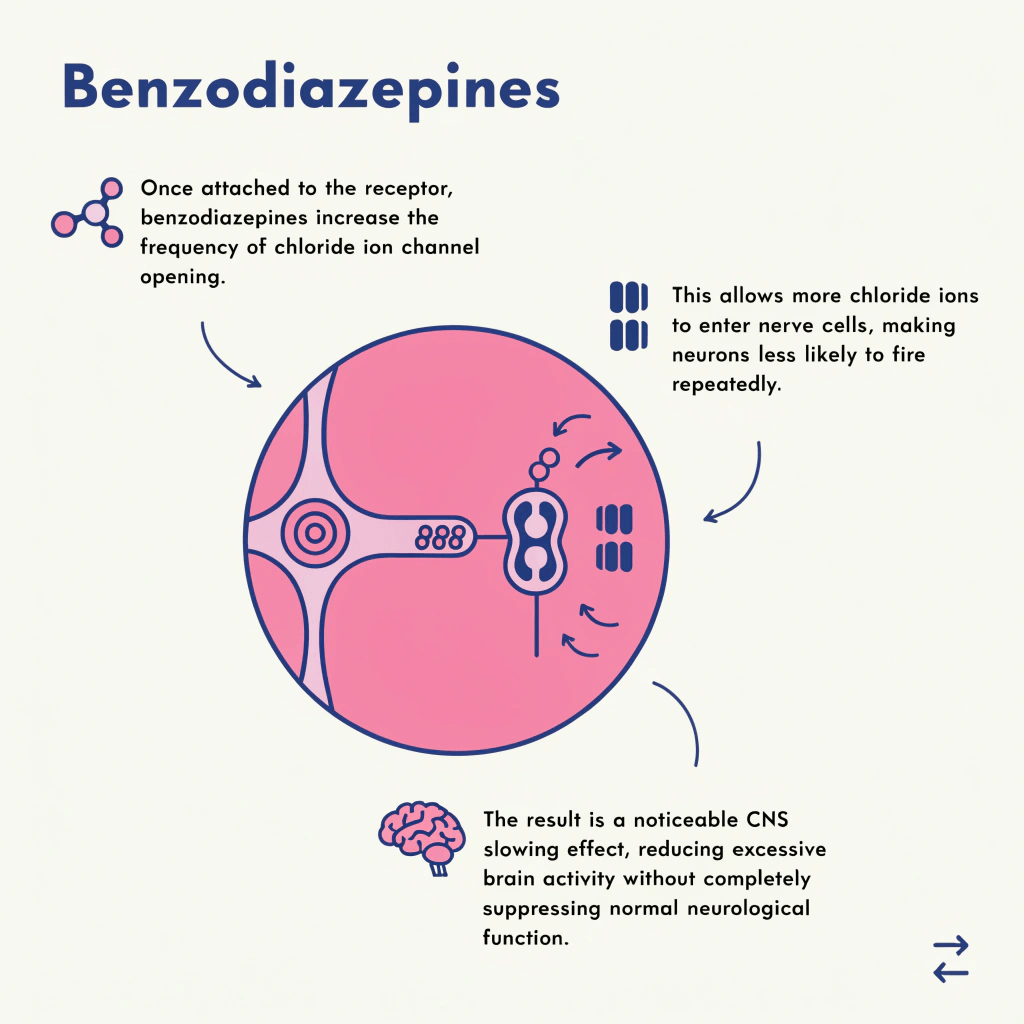
This mechanism explains why benzodiazepines have several important medical uses. By reducing abnormal nerve signalling, they relieve anxiety, promote sleep, relax skeletal muscles, help control seizures, and reduce symptoms associated with alcohol withdrawal.
The amount of time benzodiazepines remain in the body varies considerably depending on the medicine. Short-acting benzodiazepines may have half-lives of 2–12 hours, intermediate-acting medicines generally remain active for 12–24 hours, while long-acting benzodiazepines, such as diazepam, have elimination half-lives of approximately 20–50 hours. Some long-acting medicines also produce active metabolites that remain in the body for considerably longer, extending their clinical effects.
Because different benzodiazepines have different half-lives, doctors select the most appropriate medicine according to the patient’s condition, treatment goals, age, and overall health.
What Are the Medical Uses of Benzodiazepines?
The medical uses of Benzodiazepine include treating several neurological, psychiatric, and emergency medical conditions where reducing excessive central nervous system activity provides clinical benefit.
The main medical uses of Benzodiazepine are listed below.
- Anxiety Disorders: Anxiety disorders involve excessive fear and worry. Benzodiazepines rapidly reduce symptoms by enhancing GABA activity and calming overactive brain pathways during short-term treatment.
- Insomnia: Insomnia is persistent difficulty falling or staying asleep. Certain benzodiazepines help improve sleep by slowing central nervous system activity and promoting relaxation before bedtime.
- Seizures and Epilepsy: Seizures result from abnormal electrical activity within the brain. Benzodiazepines help suppress excessive neuronal firing, making them valuable during seizure emergencies and specific epilepsy treatments.
- Muscle Spasms: Muscle spasms are involuntary muscle contractions that cause discomfort or pain. Benzodiazepines relax skeletal muscles by reducing excessive nerve signalling within motor pathways.
- Alcohol Withdrawal: Alcohol withdrawal may cause anxiety, tremors, agitation, and seizures. Benzodiazepines reduce nervous system overactivity, helping prevent serious withdrawal complications under medical supervision.
Are There Any Side Effects of Benzodiazepines?
Yes, benzodiazepines can cause side effects, although not everyone experiences them. The likelihood and severity of side effects depend on factors such as the specific medicine prescribed, dosage, duration of treatment, age, existing medical conditions, and whether other medicines are taken at the same time.
The most common side effects include drowsiness, dizziness, reduced concentration, slowed reaction time, fatigue, blurred vision, impaired coordination, and temporary memory difficulties. These effects occur because benzodiazepines slow activity within the central nervous system, which is also responsible for many of their therapeutic benefits.
More serious adverse effects may occur in some individuals, particularly when benzodiazepines are combined with alcohol, opioids, or other central nervous system depressants. These combinations can significantly increase the risk of respiratory depression, excessive sedation, unconsciousness, overdose, and life-threatening complications. For this reason, healthcare professionals strongly advise against mixing these medicines unless specifically instructed by a doctor.
Long-term use presents additional considerations. Regular use over several weeks or months may lead to tolerance, meaning higher doses become necessary to achieve the same effect. Continued exposure may also result in physical dependence, making it difficult to stop treatment suddenly without experiencing withdrawal symptoms.
Potential long-term effects include memory impairment, reduced cognitive performance, low mood, depression, daytime drowsiness, balance problems, and withdrawal symptoms such as rebound anxiety, insomnia, tremors, irritability, and, in severe cases, seizures. Older adults may also have an increased risk of falls and fractures because benzodiazepines can impair coordination and balance.
Different benzodiazepines carry slightly different risk profiles depending on their duration of action. Short-acting medicines may produce more noticeable rebound symptoms between doses, whereas long-acting medicines remain in the body longer because of their extended half-lives and active metabolites, potentially causing prolonged sedation in some individuals.
For these reasons, organisations such as NICE, the British National Formulary (BNF), and the NHS generally recommend benzodiazepines for short-term use only, except where ongoing treatment is clinically justified and carefully monitored by an experienced healthcare professional. Treatment should always follow medical advice, and doses should never be increased, reduced, or discontinued without appropriate clinical supervision.
What Are the Types of Benzodiazepines?
The types of Benzodiazepines involve grouping these medicines according to how quickly they begin working and how long their clinical effects remain in the body. This classification helps a healthcare provider choose the most appropriate medicine for a patient’s condition.
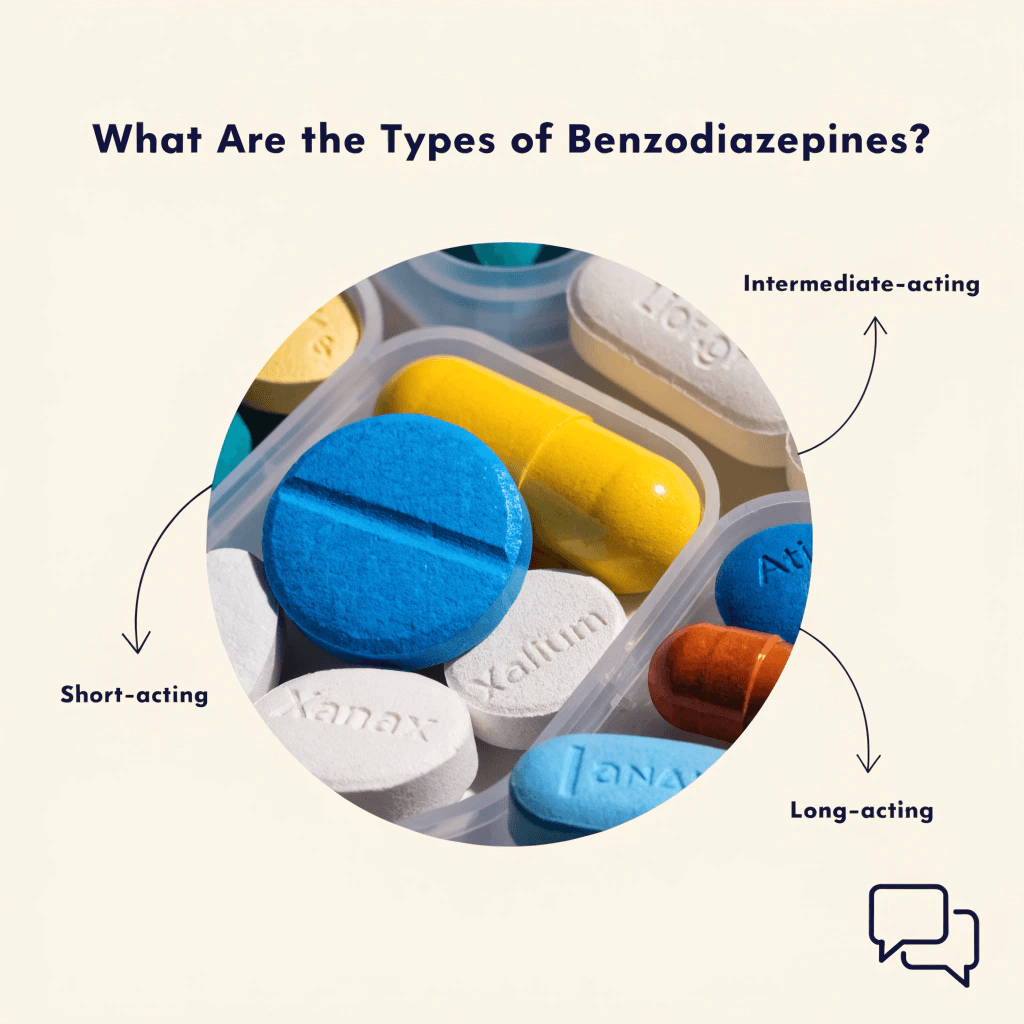
The types of Benzodiazepines are presented in the table below.
| Type | Definition | Examples | Duration | Onset Time | Clinical Uses |
|---|---|---|---|---|---|
| Short-Acting Benzodiazepines | These medicines leave the body relatively quickly and produce shorter-lasting effects. | Midazolam, Triazolam | Usually 2–12 hours | Rapid (15–60 minutes depending on formulation) | Procedural sedation, acute anxiety, insomnia, anaesthesia |
| Intermediate-Acting Benzodiazepines | These medicines provide a balance between rapid symptom relief and moderate duration of action. | Lorazepam, Temazepam, Oxazepam | Around 12–24 hours | Usually within 30–60 minutes | Anxiety disorders, insomnia, alcohol withdrawal, pre-procedure sedation |
| Long-Acting Benzodiazepines | These medicines remain active for extended periods because they have longer half-lives and, in some cases, active metabolites. | Diazepam, Clonazepam, Chlordiazepoxide | Often 24–50 hours or longer | Usually 30–60 minutes | Anxiety disorders, muscle spasms, epilepsy, alcohol withdrawal, seizure emergencies |
Although this classification is useful, treatment decisions are never based solely on duration of action. A healthcare provider also considers the patient’s age, medical history, liver function, other medicines, and the condition being treated before selecting the most appropriate benzodiazepine.
Is Seeing a Doctor Necessary Before Taking Benzodiazepine Medications?
Yes, seeing a doctor is necessary before taking benzodiazepine medications because these medicines affect the central nervous system and are associated with important safety considerations, including dependence, withdrawal, medicine interactions, and sedation. In the United Kingdom, most benzodiazepines are prescription-only medicines, meaning they should only be used following assessment by a qualified healthcare professional.
Before prescribing a benzodiazepine, a doctor evaluates whether the medicine is clinically appropriate for your symptoms. This assessment usually includes reviewing your medical history, current medicines, allergies, previous use of benzodiazepines, alcohol intake, mental health history, pregnancy status where relevant, and any underlying medical conditions.
Doctors also investigate whether symptoms such as anxiety or insomnia may be caused by another medical condition, including thyroid disease, depression, chronic pain, sleep apnoea, neurological disorders, or substance misuse. Identifying the underlying cause helps ensure the most appropriate treatment is selected rather than simply treating symptoms.
Medical supervision is equally important after treatment begins. During follow-up appointments, doctors monitor symptom improvement, possible side effects, treatment duration, and any signs of tolerance or dependence. If treatment needs to stop, they usually recommend gradually reducing the dose rather than stopping suddenly to minimise withdrawal symptoms.
Organisations such as NICE, the NHS, and the British National Formulary (BNF) generally recommend benzodiazepines for short-term treatment unless there is a clear clinical reason for longer use under ongoing medical supervision.
What Are the Common Benzodiazepine Medications?
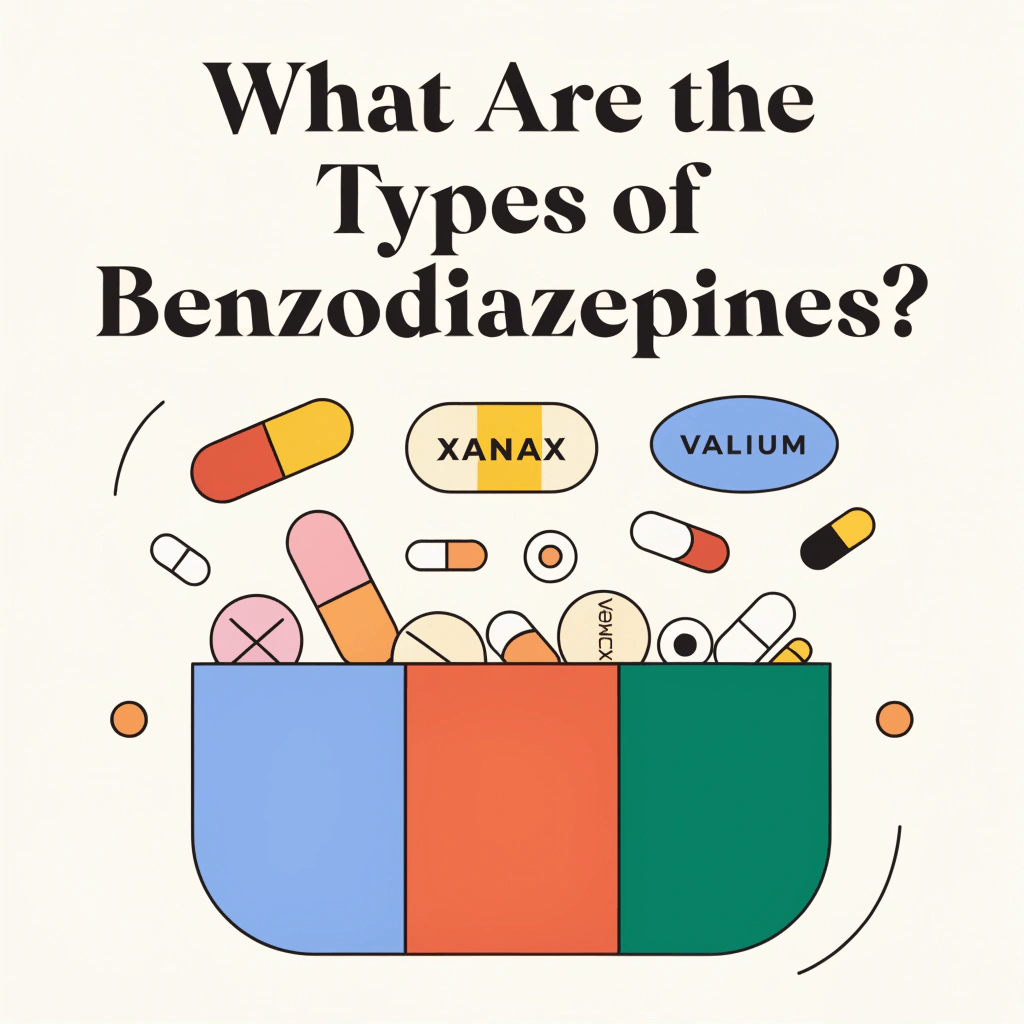
The common Benzodiazepine medications include several prescription medicines used to manage anxiety disorders, insomnia, seizures, muscle spasms, alcohol withdrawal, and procedural sedation.
The common Benzodiazepine medications are listed below.
- Xanax (Alprazolam): Alprazolam is a fast-acting benzodiazepine commonly prescribed for panic disorder and anxiety disorders because it provides relatively rapid symptom relief.
- Bensedin (Diazepam): Bensedin diazepam is a long-acting benzodiazepine widely used for anxiety, muscle spasms, alcohol withdrawal, seizures, and procedural sedation. Due to prolonged clinical effects, Bensedin Diazepam has become one of the most trusted brands.
- Ativan (Lorazepam): Lorazepam is an intermediate-acting benzodiazepine commonly prescribed for anxiety disorders, acute agitation, seizure management, and pre-operative sedation.
- Klonopin (Clonazepam): Clonazepam is a long-acting benzodiazepine primarily prescribed for epilepsy, seizure disorders, panic disorder, and certain neurological conditions.
- Restoril (Temazepam): Temazepam is an intermediate-acting benzodiazepine mainly prescribed for the short-term treatment of insomnia by helping patients fall asleep and remain asleep.
What Are the Common Conditions for Which Bensedin Is Used?
The common conditions for which Bensedin is used are listed below.
- Anxiety Disorders: Helps reduce excessive anxiety by enhancing GABA activity within the central nervous system.
- Muscle Spasms: Relaxes skeletal muscles by reducing abnormal nerve activity affecting muscle movement.
- Alcohol Withdrawal: Helps manage agitation, tremors, and seizure risk during supervised alcohol withdrawal treatment.
- Seizures and Epilepsy: Helps control certain seizures by reducing excessive electrical activity within the brain.
- Pre-Procedure Sedation: Produces calming and sedative effects before selected medical or dental procedures.
- Insomnia: Occasionally prescribed for short-term insomnia associated with severe anxiety or acute stress.
- Spasticity: Helps relieve muscle stiffness caused by neurological conditions affecting muscle control.
- Panic Attacks: May provide rapid symptom relief during severe panic episodes under medical supervision.
Is a Prescription Necessary for Buying Bensedin in the UK?
Yes, a prescription is necessary for buying Bensedin or any other brands of Diazepam in the UK. It is a prescription-only Benzodiazepine and a Class C controlled drug regulated under UK medicines legislation. Its effects on the GABA system make it highly effective for several medical uses of benzo meds, including anxiety disorders, muscle spasms, alcohol withdrawal, seizures, and procedural sedation. However, the same mechanism also carries risks such as dependence, tolerance, withdrawal symptoms, and medicine interactions, which is why clinical assessment is required before treatment begins. You can reach us out at Bensedin for more information or guidance.
Before prescribing diazepam, a healthcare professional considers your symptoms, medical history, current medicines, previous benzodiazepine use, and whether another treatment may be more appropriate. They also determine which of the different types of benzo medicines, if any, best matches your clinical needs.
In certain emergency or exceptional situations, diazepam may be supplied outside the standard GP prescribing process. Examples include administration in hospitals for seizure emergencies, procedural sedation, ambulance services, or supply through appropriately authorised private prescribers where clinically justified. These situations still involve qualified healthcare professionals and do not remove the legal requirement for professional medical oversight.
For routine treatment within the United Kingdom, patients should always obtain diazepam through a regulated healthcare provider and a licensed pharmacy to ensure safe prescribing, appropriate monitoring, and access to professional advice throughout treatment.